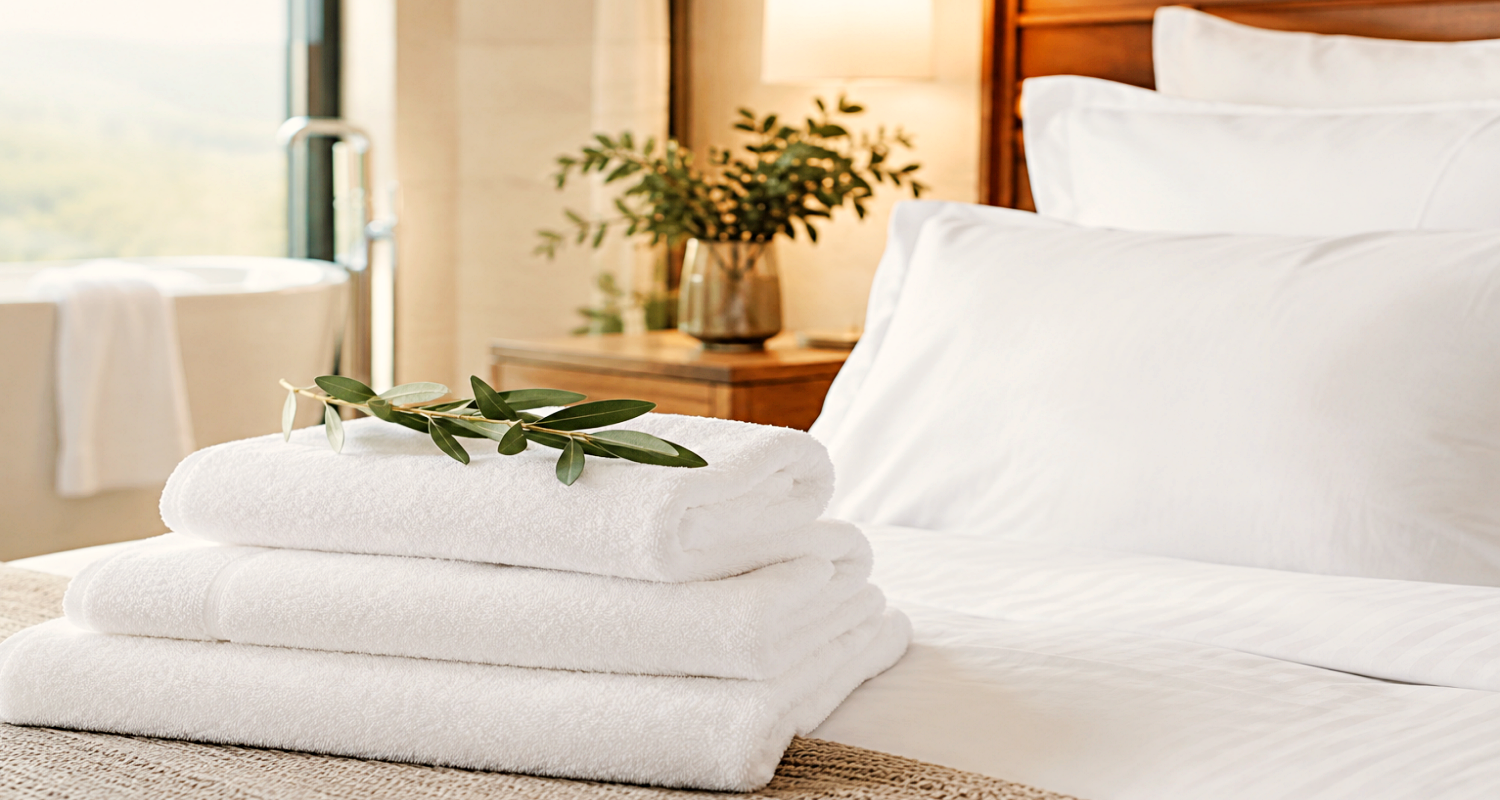
 Linens are an important part of the guest experience, from bed sheets to towels waiting in a bathroom. Guests notice how these textiles look and feel, but they may not think about how the materials were grown, processed, dyed, or finished before they reached the property. For hospitality owners and staff, understanding these differences can make it easier to select linens that support guest comfort, environmental goals, and purchasing practices. Organic fibers, healthier processing methods, certifications, and even choosing white linens can all help create a more thoughtful textile program.
What Makes Organic Linens Different?
“Organic” shouldn’t be treated as another word for natural, soft, or environmentally friendly. Organic linens begin with how the fiber itself is produced. For example, organic cotton is grown without the conventional pesticides and fertilizers associated with traditional cotton production, while flax used to make linen can be grown with relatively few agricultural inputs. Organic fibers can therefore reduce some of the chemical concerns associated with conventional fiber production.
However, the fiber is only part of the story. A textile can start with natural or organic fibers and still undergo dyeing, finishing, coatings, or other treatments during manufacturing. Sustainable textile production therefore requires considering the material’s origin, processing, and eventual end-of-life. For hospitality properties, this means looking beyond a product’s basic fiber description when evaluating linens.
Why Textile Chemicals Matter
Textiles can undergo numerous chemical processes before becoming finished sheets, towels, table linens, or other hospitality products. The Healthy Materials Lab notes that commonly used dyes, finishes, coatings, and textile treatments can contain chemicals of concern, including substances associated with carcinogenic or endocrine-disrupting effects. Some commercial textiles may also use treatments intended to provide wrinkle resistance, stain resistance, colorfastness, or other performance characteristics.
Some of these treatments can also affect indoor environments. For example, certain commercial linen products may receive formaldehyde-based wrinkle-resistant finishes, synthetic dyes, or other treatments that can leave residues or contribute to off-gassing. This does not mean every treated textile is harmful, but it shows why transparency about materials and manufacturing practices matters. For hospitality properties, it is worth asking what has been added to a textile, not simply what it is made from.
Dyes, Bleaching, and the Case for White
Color is an important design element in hospitality, but it can also require additional processing. Textile dyes can contribute to environmental pollution, while some dyeing processes involve substantial water use or chemical inputs. Even alternatives marketed as “low impact” should be evaluated carefully because the term does not necessarily mean that a textile is free from synthetic chemicals.

Bleaching deserves similar consideration. White does not always require bleaching or dyeing. Some organic cotton and other natural-fiber textiles can remain in their natural, undyed state, keeping the material’s natural off-white or creamy appearance. By choosing textiles that aren’t dyed or treated with chlorine bleach, properties can avoid these processes while still achieving a white appearance. Chlorine bleach can also create environmental concerns when it enters waterways, including the potential formation of dioxins.
This is one reason white can be a thoughtful choice for hospitality linens. White already fits the traditional hospitality aesthetic, creating a clean, consistent appearance across guestrooms and bathrooms. Choosing white also lets you prioritize undyed textiles rather than adding color solely for decoration.
Organic Cotton and Linen: Different Options to Consider
Organic cotton and linen are both natural fibers, but they offer different characteristics. Hospitality operations are familiar with organic cotton, and it works well for bedding and bath products. Linen is made from stalks of the flax plant and is naturally durable, breathable, moisture-wicking, and resistant to dust and dirt. Flax is also a relatively low-input crop that can grow with minimal fertilizer and pesticide use, but that doesn’t automatically make the resulting linen organic. Organic linen refers to linen made from flax grown and processed according to recognized organic standards, such as those established by the Global Organic Textile Standard (GOTS). These standards consider not only how the fiber is grown, but also how the finished textile is processed.
Linen also has some characteristics that may appeal to properties focused on guest comfort and healthier materials. It is naturally breathable and, according to WLLW, can be hypoallergenic, antibacterial, and resistant to dust mites. However, linen isn’t automatically free of chemical concerns. Commercial linen can still be bleached, dyed, or treated with finishes, so the product’s processing and certification remain important.
What Should Hospitality Staff Look For?
When selecting hospitality linens for guestrooms, retail programs, or other areas of a property, staff should evaluate more than appearance and price. A useful purchasing review can include:
- Fiber content: Determine whether the textile is organic, conventional, synthetic, or a blend.

- Certifications: Look for recognized certifications such as GOTS or OEKO-TEX, depending on what you want the certification to verify. GOTS addresses organic fibers and ecological and social criteria throughout the supply chain, while OEKO-TEX Standard 100 tests finished textiles for harmful substances.
- Dyes and finishes: Ask whether the manufacturer uses dyes, wrinkle-resistant treatments, stain-resistant finishes, optical brighteners, or other chemical treatments.
- Manufacturer transparency: If the manufacturer doesn’t disclose chemical content or processing information, consider whether you have enough information to make an informed purchasing decision. For example, some cotton sheets achieve wrinkle resistance through fabric construction rather than topical chemical treatment. Fiber quality, yarn engineering, fabric weight, and balanced weaving can help the fabric relax and lie flatter after laundering, giving a smoother appearance without a surface coating.
- Durability and care: Hospitality textiles must withstand frequent washing and daily use, so consider sustainability alongside performance and longevity.

Making Better Choices for Guests and the Property
Sustainable hospitality linens aren’t defined by a single characteristic. Material sourcing, manufacturing, chemical use, durability, laundering, and end-of-life considerations all contribute to a textile’s overall environmental impact. For hospitality properties, that means a genuinely thoughtful linen program considers the entire product, not just a single marketing claim.
White linens can fit naturally into that approach. They deliver the familiar, clean look guests expect while creating an opportunity to choose undyed textiles and cut unnecessary processing. When paired with certified organic fibers, transparent manufacturing practices, and careful attention to dyes and finishes, white linens can be more than a traditional hospitality choice; they can support a more informed approach to guest comfort and environmental responsibility.
How InnStyle Helps You Make Informed Linen Choices
At InnStyle, we understand that selecting hospitality linens involves more than choosing the right color, feel, or price point. Property owners and staff also need to consider fiber content, certifications, processing methods, chemical treatments, durability, and how those factors affect both guests and daily operations. Whether you are reviewing your current linen program, considering organic alternatives, or simply want more information about the products you provide to guests, we’re here to help you make practical choices for your property. For questions about hospitality linens, bedding, towels, or other guest room solutions, contact us at 267-354-6020 or visit www.innstyle.com.
We’re eager to assist you!
FAQ
Q: Are organic cotton linens worth the extra cost for hotels?
A: Organic linens can be worth the investment for hotels that prioritize responsible material sourcing, guest considerations, and environmental goals. While some organic sheets may cost more upfront, properties should also consider durability, laundering requirements, certifications, and the product’s overall lifecycle when evaluating value.
Q: What are some green practices that hotel properties are currently utilizing?
A: Hotels are using green practices such as reducing water and energy consumption, limiting plastic and food waste, choosing sustainable hospitality linens, extending linen lifespans, and creating programs for linen reuse, donation, and recycling. Properties can also evaluate lower-impact textile production, responsible material sourcing, and more efficient laundering practices.
Q: What textile certifications should a sustainable hospitality property look for?
A: Hospitality properties should consider certifications such as GOTS (Global Organic Textile Standard) and OEKO-TEX® Standard 100 when evaluating sustainable textiles. GOTS addresses organic fiber content and environmental and social criteria throughout the supply chain, while OEKO-TEX® Standard 100 tests finished textiles for harmful substances.